Airbnb Welcome Basket: 10 Useful Ideas Under $15
Airbnb welcome basket ideas can fit a $15 planning cap. Pick items guests can use, keep food labels, and leave a short card that points to the house guide.
By Airbnb Host Bundle by Cosmo Suite · Editorial policy
Published · 8 min read
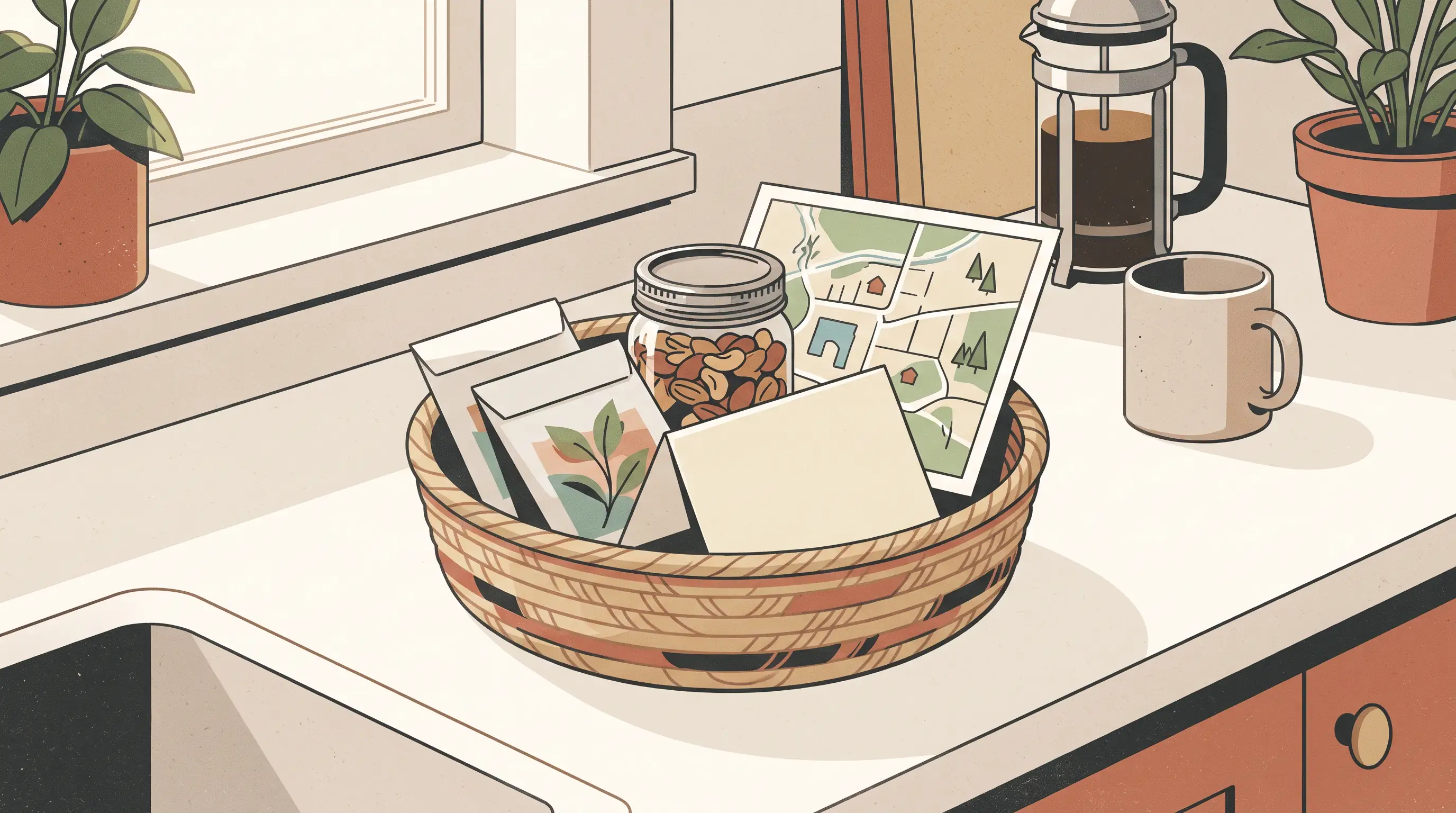
An Airbnb welcome basket can be useful without turning every turnover into a gift-shopping trip. Set a firm cap, choose a few things a guest can use on arrival, and put the house information somewhere easy to find. The $15 limit here is a planning example, not a market average. Prices and availability vary by store and location.
Ask what job each item does. It may solve a small arrival problem, show something local, or help a guest settle in. If it does none of those, leave it out. Stock required amenities first; the basket is an optional extra.
An Airbnb welcome basket is a small group of optional arrival items, such as a sealed snack, tea, or local map. It is separate from required amenities and the house information guests need to use the property.
Airbnb Welcome Basket Ideas at a Glance
For a small welcome basket under $15, pair one useful arrival item with a local or personal touch, then leave room for a note. Use the table to choose a mix; the amounts are budget allocations, not quoted retail prices.
| Idea | Guest use | Budget allocation | Best for |
|---|---|---|---|
| Tea or coffee sachets | A drink after arrival | $3 | Late arrivals |
| Sealed local snack | A quick bite | $4 | Guests arriving between meals |
| Bottled water or refill note | Finds drinking water | $2 | A hot day or unfamiliar kitchen |
| Local postcard or map | Finds a nearby stop | $2 | First-time visitors |
| Printed welcome card | Finds WiFi and house guide | $1 | Every stay |
| Small seasonal extra | A timely local touch | $3 | A specific season or event |
This example adds to $15. You can replace any line with something guests can use at your property. The card and guide should carry the useful details; a snack does not explain the lockbox or checkout.

Start with what guests need on arrival
Choose items around the first hour of a stay. A guest who arrives after shops close may value a sealed snack and clear water instructions more than a decorative keepsake. A family may use a simple local map. A business traveler may only want tea or coffee and a quiet place to unpack.
Airbnb's home preparation guidance names basics such as toilet paper, soap, towels, pillows, and linens. It also mentions kitchen basics like coffee and tea. These are part of getting the listing ready. They should not depend on whether you leave a welcome gift.
For a basement suite, keep the basket on the kitchen counter beside a short welcome card. Put the longer Airbnb welcome book layout nearby, where it can answer questions about WiFi, access, and checkout. The basket should point to the information, not compete with it.
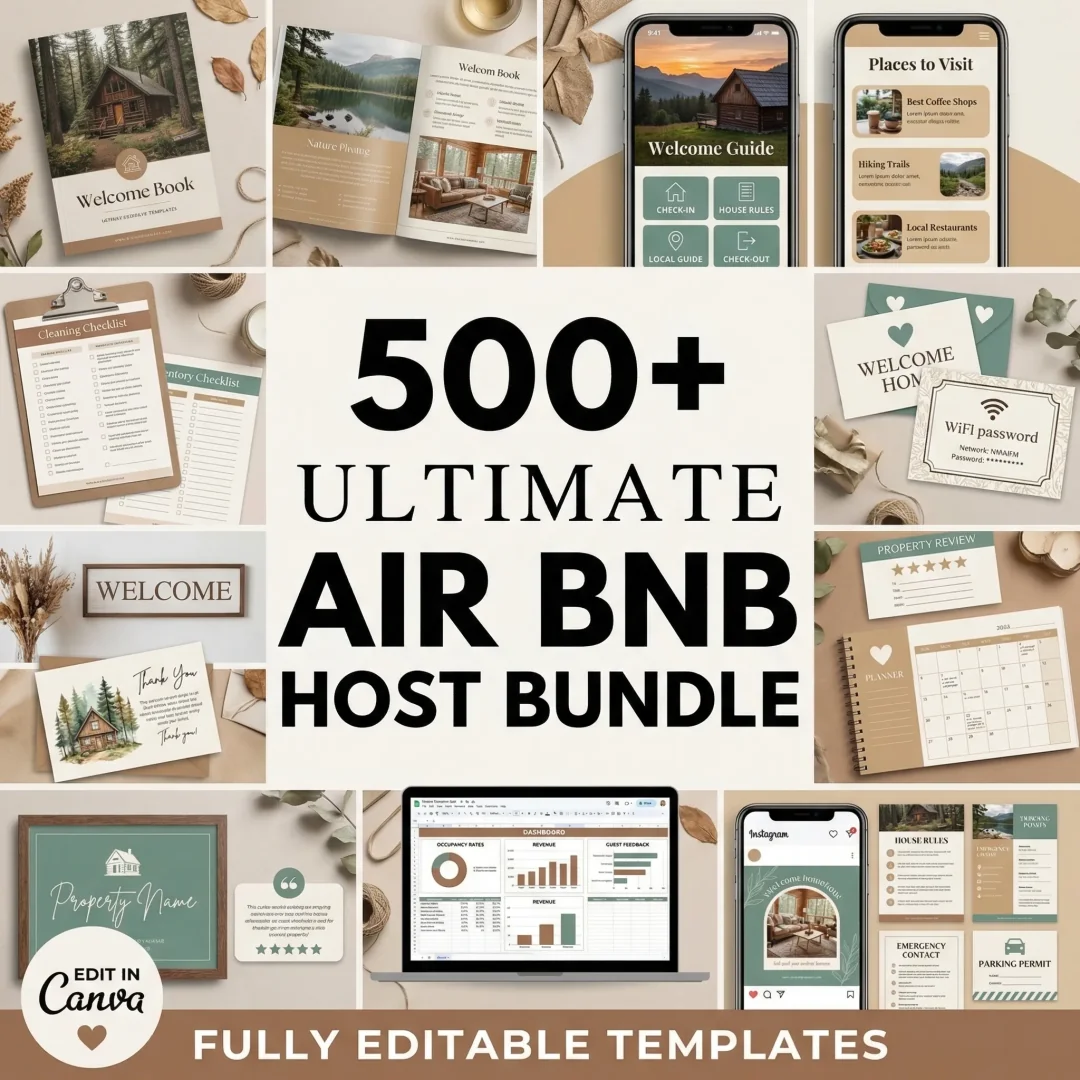
If you want a set of coordinated pages and signs for guest information, Airbnb Host Bundle has editable host templates. Use only the pages that fit your property and keep every detail current.

Ten practical items to consider
Choose for the stay. Two or three useful items that suit the unit are enough for this example; use the table to keep the total within your cap.
1. Tea or coffee: give a tired guest an easy first drink
Single-serve tea bags or coffee portions are easy to store and simple to portion. Label where the kettle, mugs, and any coffee maker are. If you already stock these as kitchen basics, list them on your turnover checklist rather than counting them twice as a gift.
Use it for: late arrivals and a kitchen that is unfamiliar.
2. A sealed local snack: offer one small taste of the area
Choose a packaged item with an intact ingredient label. A local product adds context without requiring a long note. Avoid loose food in an open bowl: the guest cannot check the ingredients or tell when it was opened.
Use it for: a short stay where guests may arrive hungry.
3. A water option: explain the drinking-water setup
If you provide bottled water, make the choice fit your waste and restocking plan. If guests should use a filter or tap, say where it is and how it works. Do not imply that water is unsafe unless you have a verified reason and clear instructions.
Use it for: a property where the kitchen setup is not obvious at first glance.
4. A local map or postcard: give one useful nearby pointer
A small printed map can mark a grocery store, transit stop, or the trailhead described in your listing. Check it when a business or route changes. A postcard can be decorative, but a marked map is more useful if the guest is new to the area.
Use it for: a cabin or unit where guests need one local orientation cue.
5. A welcome card: point to the information that matters
Keep the card brief. Welcome the guest, say where to find the WiFi and house guide, and give the correct contact route for an urgent issue. Do not copy every house rule onto a tiny card. The house guide and checkout details belong in a place guests can read before checkout.
Use it for: every listing, even when the rest of the basket changes.
6. A small seasonal item: use it only when it fits
A packet of cider mix in cool weather or a cooling cloth in a hot climate may make sense. Pick one seasonal detail, then remove it when the season passes. Skip anything that creates an expectation you cannot meet for every relevant booking.
Use it for: a specific weather pattern or local event, not a generic luxury signal.
7. A family-friendly option: make the choice clear
For a family stay, consider a sealed coloring sheet or a small pack of crayons rather than a toy with loose parts. Keep it separate from food. Do not assume children are staying unless the reservation or guest has told you.
Use it for: a listing that welcomes families and has a safe place to leave the item.
8. A practical comfort item: solve a small, known friction
Earplugs or a sleep mask may help in a noisy or bright setting, but they do not replace accurate listing information about noise, light, or the sleeping space. Choose a sealed item and explain its purpose without suggesting the property has a problem you have not disclosed.
Use it for: a known, clearly described feature of the property.
9. A reusable local tip: offer a recommendation without a sales pitch
Write down one nearby bakery, market, or public viewpoint that you have checked recently. State whether the guest should verify opening hours. Avoid claiming a business is open or available unless you have confirmed it for the relevant date.
Use it for: hosts who know the neighborhood and can keep the recommendation current.
10. Nothing extra: keep the budget for the essentials
Leaving no gift is a valid choice. A clean room, working access instructions, and stocked essentials are the baseline. Airbnb's hosting guidance presents welcome gifts as one possible extra, alongside preparation and comfort steps. You can make the arrival feel considered without adding a basket.
Use it for: a tight turnover, a long stay, or a listing where guests bring their own supplies.
Build a $15 basket without making it a promise
Treat $15 as a per-stay planning ceiling. Before buying, price the specific products where you shop. If the total is over your cap, remove an item or choose a lower-cost alternative; do not assume a national average or copy a price from another host.
Here is a worked allocation: reserve $4 for one sealed snack, $3 for tea or coffee portions, $2 for a water option, $2 for a local map or postcard, $1 for the welcome card, and $3 for a seasonal extra. The total is $15. These are amounts set aside in the example budget. They are not current prices for those goods.
For each stay, record the actual cost from your receipt. If you host a 2-night reservation and put out one snack and two drink portions, your calculation is the receipt cost of those items divided by the number you used. Do not divide a bulk pack by an assumed number of guests if the count is unknown.
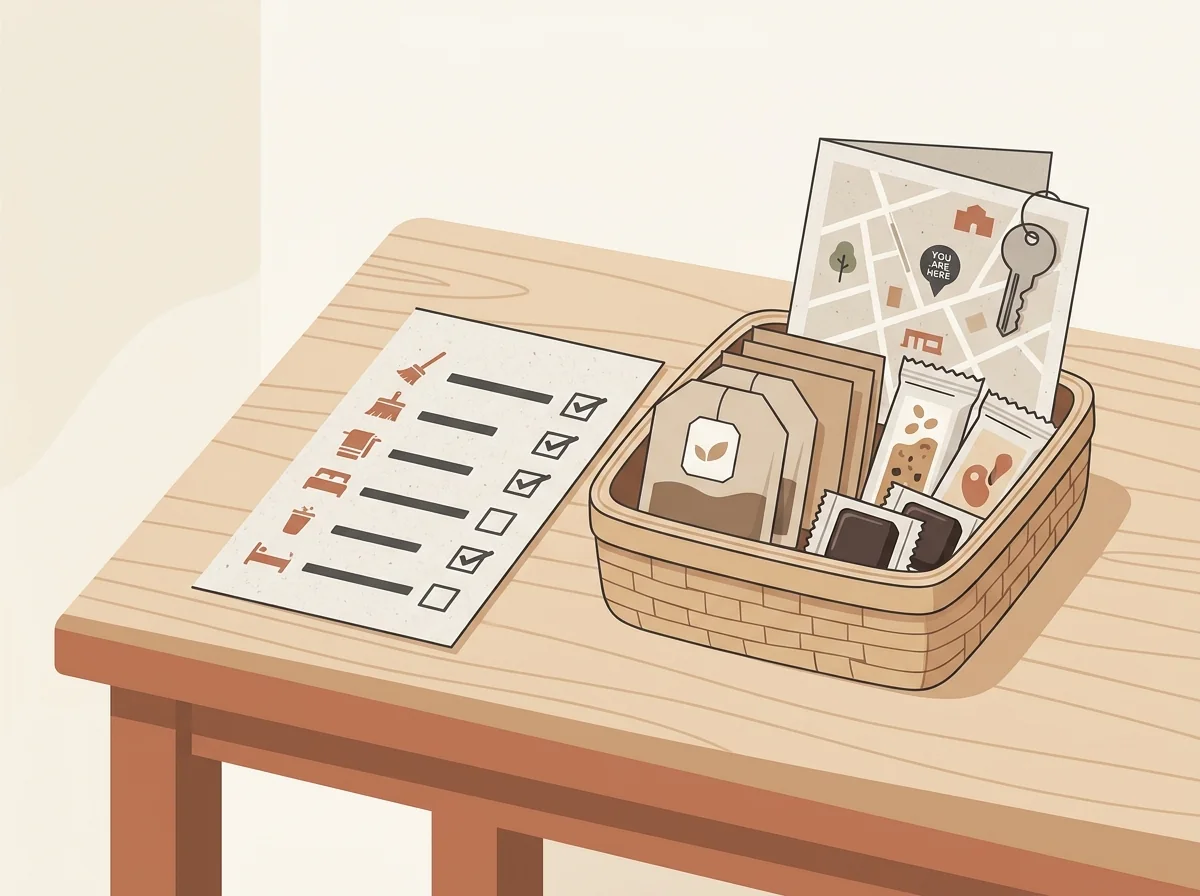
Use a simple turnover card:
- Item and quantity to place
- Storage location for refills
- Restock point, such as “replace when the last two sealed portions are used”
- Date checked for local details on a printed map
- Note if an item is seasonal or optional
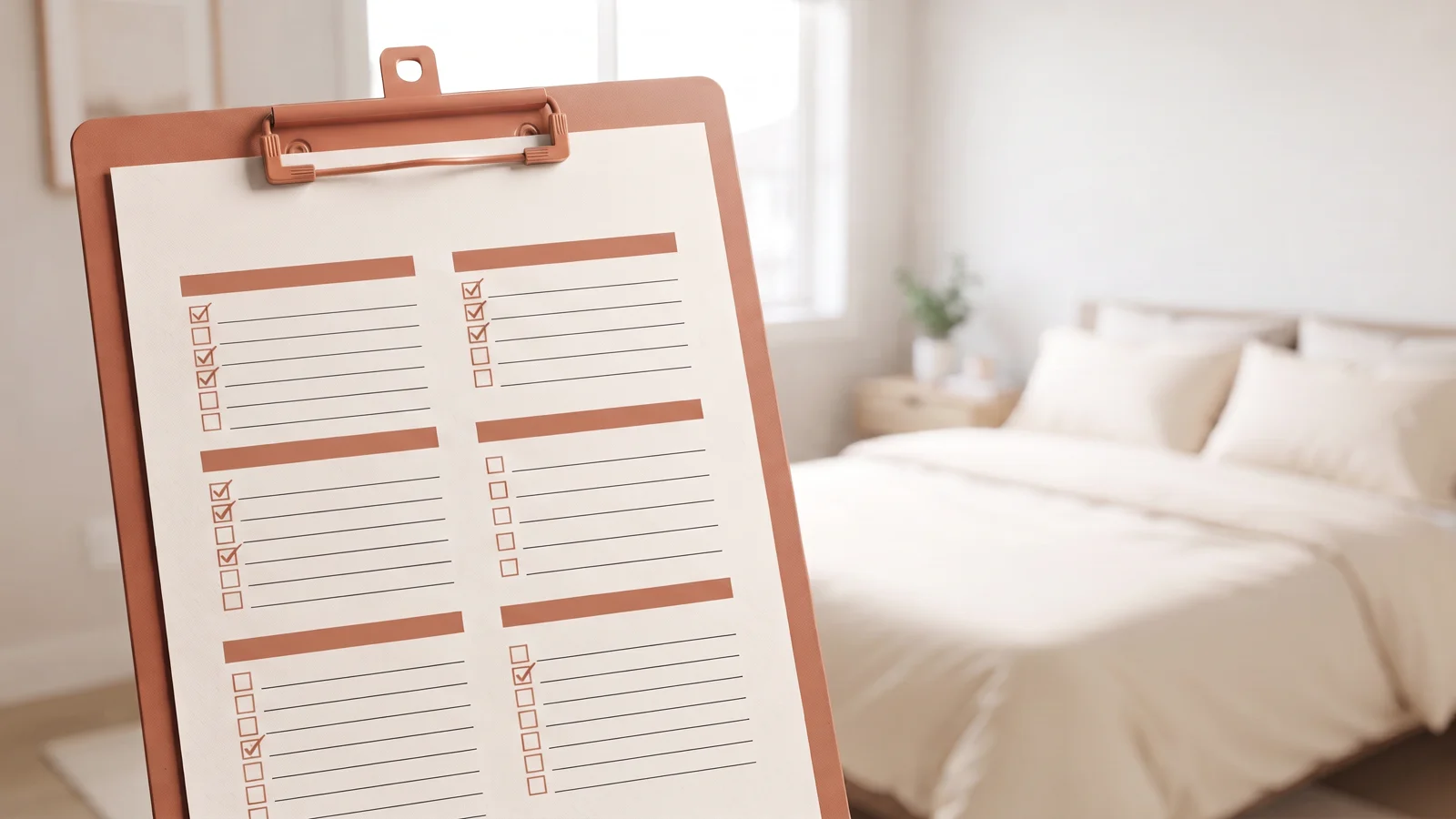
This keeps a welcome basket from becoming another vague task. You can add a matching turnover checklist to the reset routine so whoever prepares the unit can see what belongs on the counter.
Food, allergies, and clear expectations
Packaged food is easier to identify because the label shows ingredients and allergen information. The U.S. FDA's food-allergy guidance explains how food-allergen labeling works and lists the major allergens that must be declared on packaged foods. Keep the original packaging or label with anything you provide.
Avoid making health claims about a snack or drink. Do not label something “allergy safe” unless you can verify ingredients and cross-contact controls. If you provide homemade food, check the applicable local requirements and tell guests what it contains. The details differ by location, so a general hosting article cannot establish what is allowed where you operate.
Also make the basket optional. Guests may have dietary restrictions, may not want food, or may arrive with their own supplies. Never charge a separate mandatory fee for a welcome gift unless that charge is clearly disclosed and permitted under the rules that apply to your listing.
What makes a welcome basket work in a small listing
The basket works when each part has a job: one arrival need, one local cue, and one route to the house information. More items add restocking and decision work. They do not automatically make the stay easier.
The basket cannot answer every arrival question. A snack will not explain parking, and a map may not show which entrance to use. Put those details in the welcome book or check-in message, then keep the basket small. A printable welcome book and host materials can keep guest-facing details together across a listing.
For a self-managed host with one to three listings, a standard set makes each turnover easier to repeat. Note exceptions for each unit and check the card as you reset the space. Change only the items that need to match a different guest or property.
Airbnb's hosting guide to preparing a space lists a handwritten note or basket as one optional welcome and recommends placing the house manual where guests can find it. Airbnb Host Bundle includes editable welcome cards, welcome books, signs, and cleaning and inventory checklists. The files can help you keep those pieces visually consistent, but they do not restock a unit or send messages automatically. See the Airbnb Host Bundle templates if you want printable guest materials you can adapt.
Why Trust This Article
The Cosmo Suite team that made Airbnb Host Bundle fact-checked Airbnb's home-preparation guidance and the cited FDA page on October 31, 2026. The $15 figures are a clearly labeled sample budget, not a survey or retail price study. Check current local prices and rules before you prepare food or make a specific amenity promise.
Frequently asked questions
What should I put in an Airbnb welcome basket?
Pick a few sealed items guests can use soon after arrival, such as tea, coffee, a packaged snack, or a local map. Add a note pointing to the welcome book. Keep required supplies stocked separately.
How much should an Airbnb welcome basket cost?
There is no required amount. Set a cap for your listing and stay length, then check local prices before you buy. The $15 example in this guide is a planning limit, not a retail price survey.
Should I include homemade food in a welcome basket?
Packaged food keeps its ingredient and allergen label with it. If you offer homemade food, check the local rules and tell guests what it contains. A note alone does not cover safe food handling.
Do guests expect an Airbnb welcome gift?
A welcome gift is optional. Airbnb suggests a note or basket as one possible welcome. Its preparation guidance also lists basics such as soap, towels, pillows, and linens. Get the home ready before adding a gift.
How do I keep welcome baskets affordable between stays?
Choose shelf-stable items, set a per-stay cap, and keep refills together. Put the item, quantity, and refill point on a turnover card. Check leftover food before reusing it, including its condition and how it was stored.